Plenary speakers
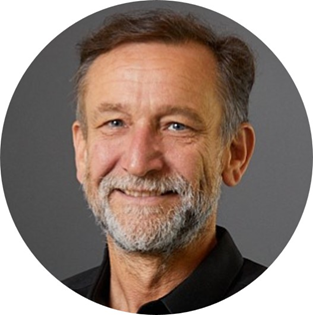
Gerhard Mestl
Head of the Department Oxidation Catalysis, Clariant AG, Germany
Dr. Gerhard Mestl has extensive experience as a researcher and manager at several German catalyst manufacturers, and for the last 13 years with Clariant. In 2017, Gerhard Mestl received the EFCATS Catalysis Award, and he was being specifically recognized for his seminal achievements in the field of selective oxidation.
Title of lecture:
Perspectives for Academic–Industrial Research in Development and Scale-up: Show Case — Selective Oxidation Catalysts
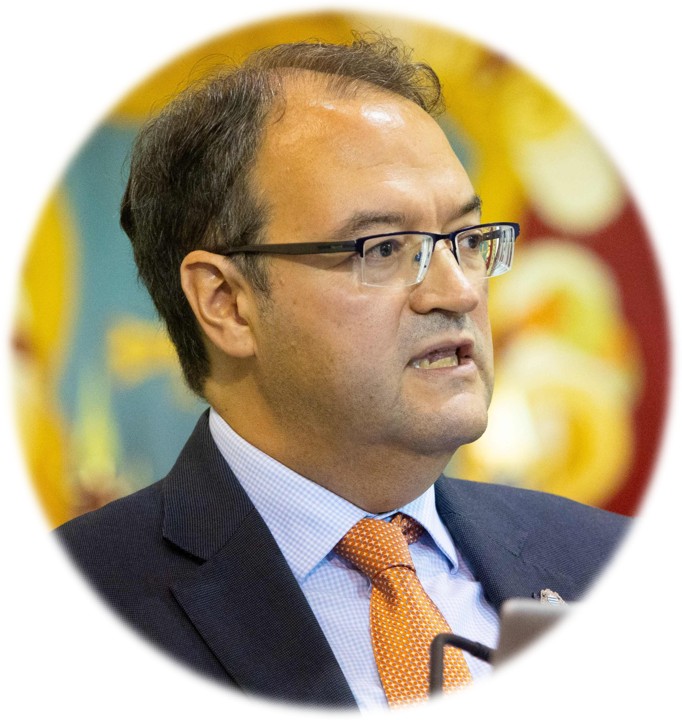
Salvador Ordóñez
Department of Chemical and Environmental Engineering of the University of Oviedo, Spain
Salvador Ordóñez is Full Professor at the Department of Chemical and Environmental Engineering of the University of Oviedo since 2012. His research interests are focused on the application of heterogeneous catalysis and chemical reactors technology to different environmental problems (VOCs abatement, treatment of waste and wastewater polluted with organochlorine compounds, reduction of NOx, elimination of emerging pollutants in water, etc.), as well as the development of processes based on sustainable or renewable raw materials (membrane reactors for the production of hydrogen, production of fuels and chemical products from inedible biomass using catalytic processes, recovery of methane content in gases of mine venting, syngas upgrading to chemicals, pyrolysis oil upgrading). Adsorption processes (both in the gas phase and in the aqueous phase), chemical processes simulation, and electro-catalytic and photocatalytic technologies are also among his research interests. He is also involved in research about hydrogen chemical storage (LOHCs), as well as physical storage of hydrogen and methane using adsorption technologies.
He is the author or co-author of more than 240 scientific articles published in international journals (JCR-indexed journals), five patents, and several book chapters. He has also participated in research contracts and technology consulting contracts with different companies and public administrations.
Title of lecture:
Pyrolysis Oil as a Circular Feedstock: Thermocatalytic and Photocatalytic Routes and Reaction Engineering Challenges.
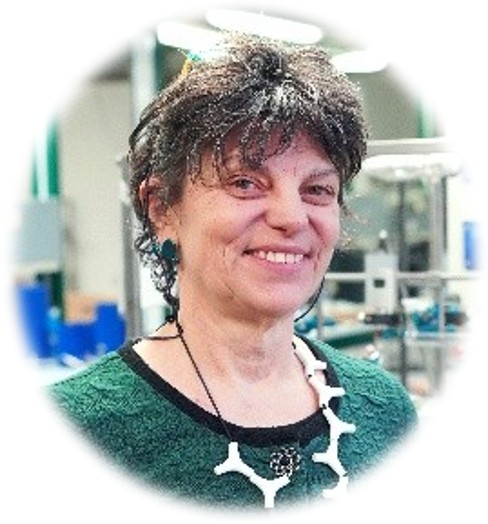
Silvia Bordiga
Department of Chemistry, NIS Center and INSTM Reference Center, University of Turin, Via Quarello 15, 10135, Turin, Italy
Silvia Bordiga is Full Professor in Physical Chemistry at the Department of Chemistry of the University of Turin. From 2012 to 2020 she was Prof. II at the Department of Chemistry of the University of Oslo. She is member of the SSST School Council. Her scientific activity is mainly devoted to the characterization of the physical–chemical properties of high surface area nanostructured materials (Zeolites and MOFs) used as heterogeneous catalysts, materials for adsorption, separation and storage, through in situ spectroscopic studies. She became member of Accamia dei Lincei in 2023 and Accademia delle Scienze di Torino in 2024.
She received many awards: 2017- Prize from the French Chemical Society (bilateral prize France – Italy); 2019- Francois Gault Lectureship Award from EFCATS; 2018-2019- Chemistry European Fellow; 2019- Wilhelm Manchot Research Professorship of the Dep. of Chemistry at the TUM University, Germany; 2021- Premio Antonio Feltrinelli dall’ Accademia dei Lincei, 2023- Paolo Chini award.Salvador Ordóñez is Full Professor at the Department of Chemical and Environmental Engineering of the University of Ovied
Title of lecture:
Optical spectroscopy as a “Swiss army knife” in understanding catalysts.
Keynote speakers
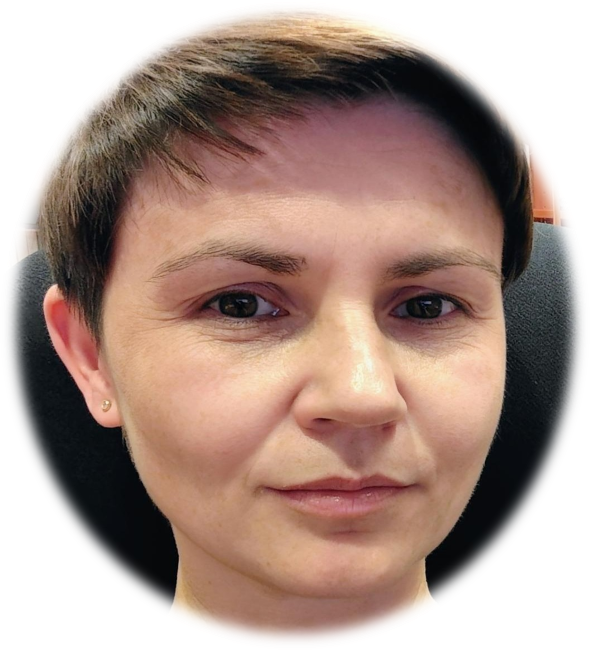
Gabriela Grzybek
Faculty of Chemistry, Jagiellonian University in Krakow, Poland
Professor G. Grzybek is a researcher in heterogeneous catalysis recognized for her strong scientific activity and international impact. She obtained her habilitation (Dr. hab.) in Chemical Sciences in 2025 at the Faculty of Chemistry, Jagiellonian University in Kraków, Poland. Her research focuses on the development of efficient catalytic systems based on alkali promoters, cobalt active phases, and oxide supports, with emphasis on structure–surface–activity relationships. She currently serves as University Professor at the Department of Inorganic Chemistry, Jagiellonian University, where she has worked since 2012 in various academic positions. She has also completed several international research stays, including at the University of Alicante (Spain) and KTH Royal Institute of Technology (Sweden).
Preliminary title of lecture: Support-driven and alkali-promoted cobalt catalysts for ethanol steam reforming.
Maria Mihet
National Institute for R&D of Isotopic and Molecular Technologies – INCDTIM, Cluj-Napoca, Romania
Dr Maria Mihet is an Established Researcher at the National Institute for Research and Development of Isotopic and Molecular Technologies (INCDTIM) in Cluj-Napoca, Romania. Her research focuses on the development of new catalysts and catalytic processes for CO₂ valorization, reforming reactions, and hydrogen energy. She has achieved notable results in designing MOF-based and MOF-derived catalysts with promising activity for CO₂ conversion. Her work has been internationally recognized through publications in leading journals and invited presentations at international conferences. In 2025, her scientific contributions were honored with the I.G. Murgulescu Award of the Romanian Academy for Chemical Sciences.
Preliminary title of lecture: Opportunities and Challenges in CO2 valorization by MOF-derived catalysts.
Christoph Markowitsch
Chair of Process Technology and Industrial Environmental Protection, Montanuniversität Leoben, Austria
Dr Christoph Markowitsch is a researcher in chemical engineering at Montanuniversität Leoben and a member of its Tenure Track Program. His research focuses on sustainable aviation fuel (SAF) production, combining catalyst development, reaction engineering, and process design. He obtained his PhD in 2024 with work on the reverse water–gas shift (rWGS) reaction and gained international experience at the University of Wisconsin–Madison. He is currently involved in the development and operation of a pilot-scale SAF research facility, bridging fundamental catalysis with industrial application.
Preliminary title of lecture: Development of Innovative Process Routes for Sustainable Aviation Fuels.
Michal Horňáček
Department of Organic Technology, Catalysis and Petroleum Chemistry Faculty of Chemical and Food Technology STU in Bratislava, Slovakia
Dr Horňáček is an associate professor and Head of the Department of Organic Technology, Catalysis and Petroleum Chemistry at the Slovak University of Technology. His research focuses on heterogeneous catalysis in petrochemical processes, particularly the alkylation of aromatic hydrocarbons over zeolite catalysts, as well as biomass conversion into valuable chemicals. He obtained his PhD in 2009 in organic technology and petrochemistry and habilitated in 2025 on selective heterogeneous catalysts and their applications. Dr Horňáček has extensive experience with zeolites and other catalytic materials, including hydrotalcites, covering applications such as cracking, alkylation, and hydrogenation. His work bridges traditional petrochemical processes with renewable resource utilization, contributing to the development of sustainable catalytic technologies.
Preliminary title of lecture: Selective heterogeneous catalysts and their applications in petrochemical processes.
Joanna Olszowka
Deputy Head, Department of Nanocatalysis, J. Heyrovsky Institute of Physical Chemistry, Czech Academy of Sciences, Czech Republic
Dr. Joanna E. Olszówka is a researcher in heterogeneous catalysis at the J. Heyrovský Institute of Physical Chemistry in Prague, Czech Republic. She specializes in the design, characterization, and mechanistic understanding of catalytic materials, with particular interest in how structural defects and metal–support interactions influence performance. Her work integrates catalyst synthesis with advanced spectroscopic and synchrotron-based methods to study materials under working conditions. She aims to translate fundamental insights into practical strategies for enhancing catalyst stability and efficiency in relevant reactions.
Preliminary title of lecture: Metal-support interactions in Ni-based Catalysts for Dry Methane Reforming: Insights from Model and Powder Systems.
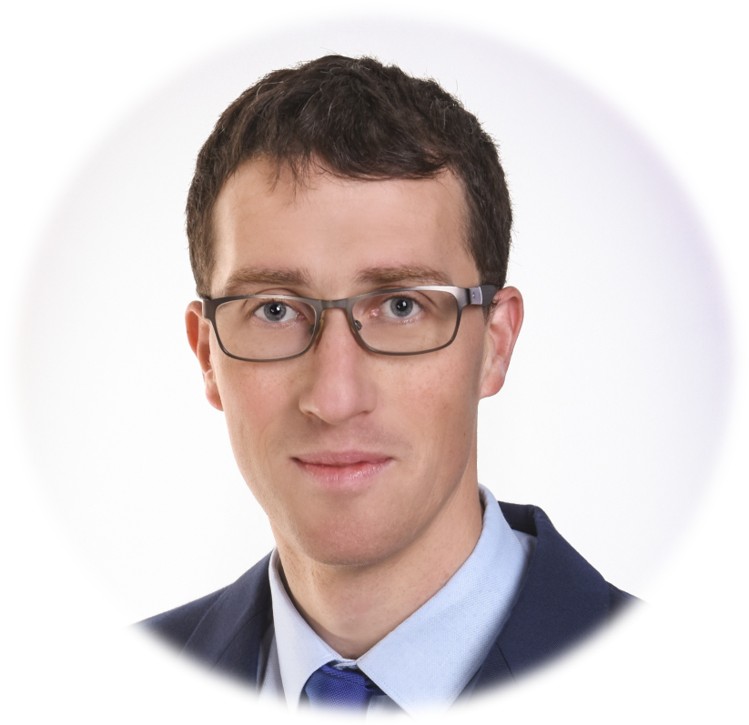
Endrődi Balázs
Department of Physical Chemistry and Materials Science, University of Szeged (SZTE), Hungary
Dr. Balázs Endrődi is an assistant professor at the University of Szeged, Hungary, in the Department of Physical Chemistry and Materials Science. His research focuses on applied electrochemistry, particularly the electrochemical valorization of CO₂ and the development of electrolyzer systems. He obtained his PhD in Chemistry in 2015 at the University of Szeged, where he has been actively involved in electrochemical research since his early studies.
Following his PhD, he completed a postdoctoral stay at KTH Royal Institute of Technology in Stockholm, working on industrial electrochemical processes. Since returning to Szeged in 2019, he has been developing and scaling up CO₂ electroreduction systems, combining materials optimization with electrolyzer design.
Preliminary title of lecture: Beyond the Catalyst: How CO2 Electrolyzer Cells Really Operate.